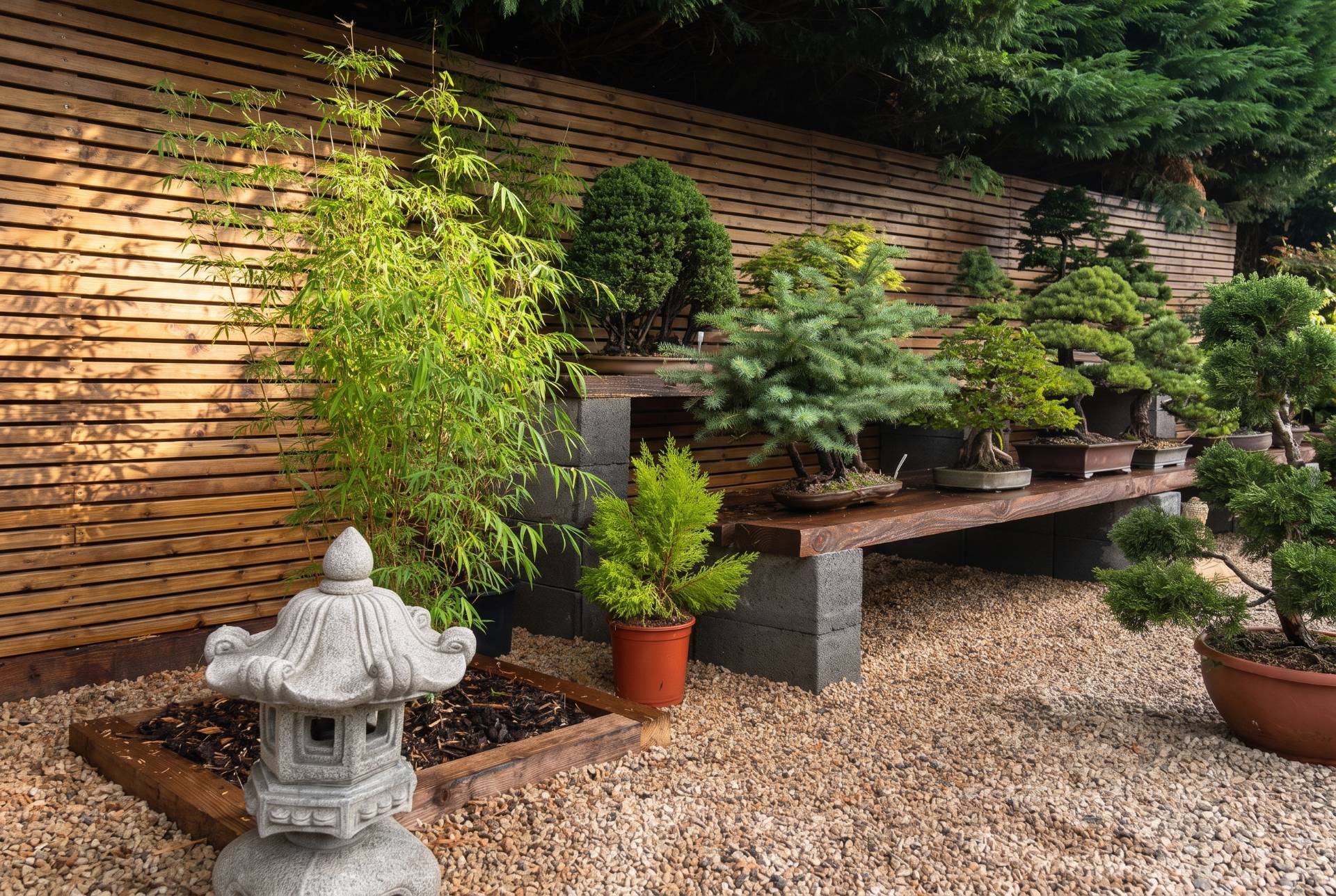
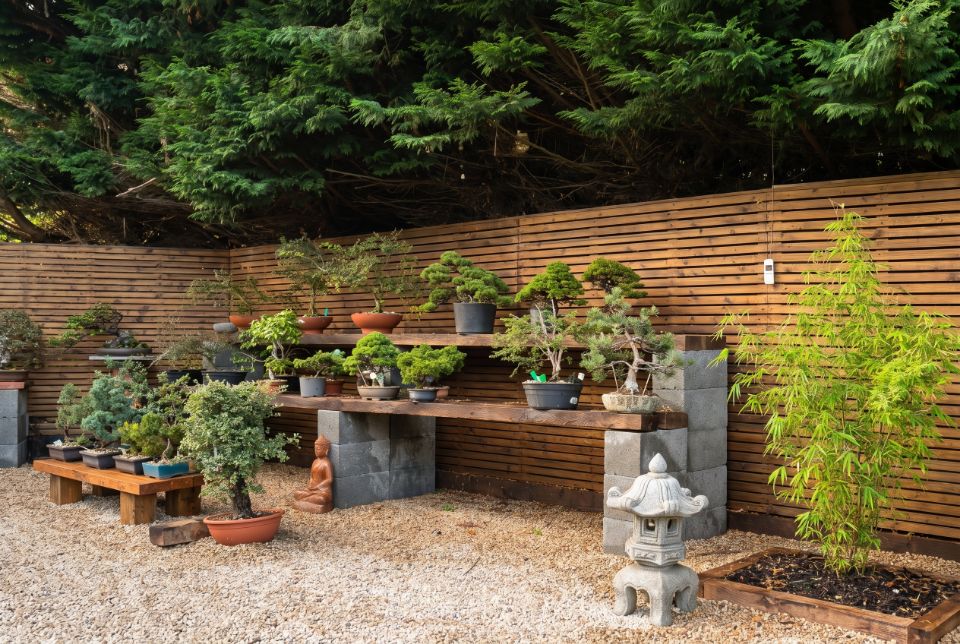
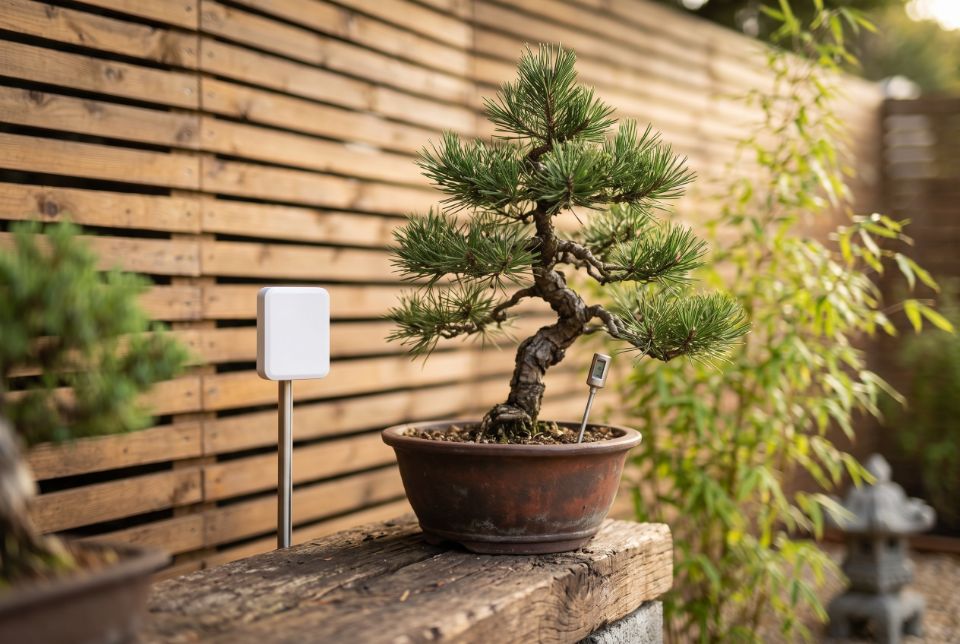
At Bamsai, bamboo and bonsai are not simply two collections growing beside one another. We are exploring how bamboo can become part of the growing environment itself, providing living shade, shelter and microclimate moderation for bonsai.
The problem: bonsai and summer exposure
Bonsai growers are familiar with the challenges created by periods of strong sunshine, heat and drying wind.
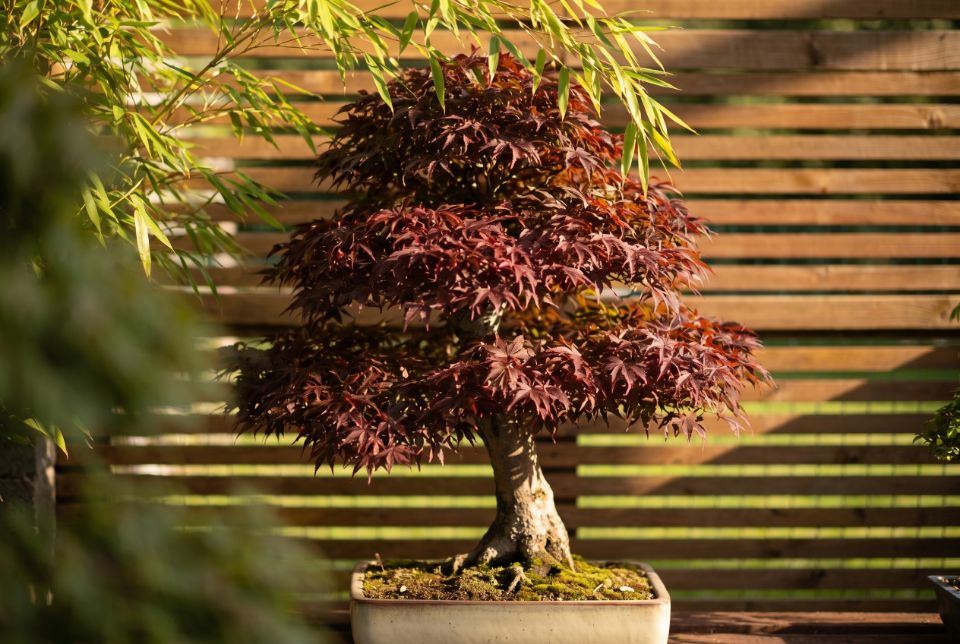
Unlike a tree growing naturally in the ground, a bonsai has a relatively small volume of growing medium contained within a pot. On warm, bright days that root environment can heat and dry rapidly, while sensitive foliage, particularly on species such as Japanese maples, can suffer from excessive exposure and moisture stress.
Traditional solutions include shade netting, temporary screens, moving trees into sheltered positions and increasing watering frequency. All of these have their place.
At Bamsai, however, we are also exploring a more natural approach.
Can the garden itself help protect the bonsai growing within it?
Bamboo as living shade
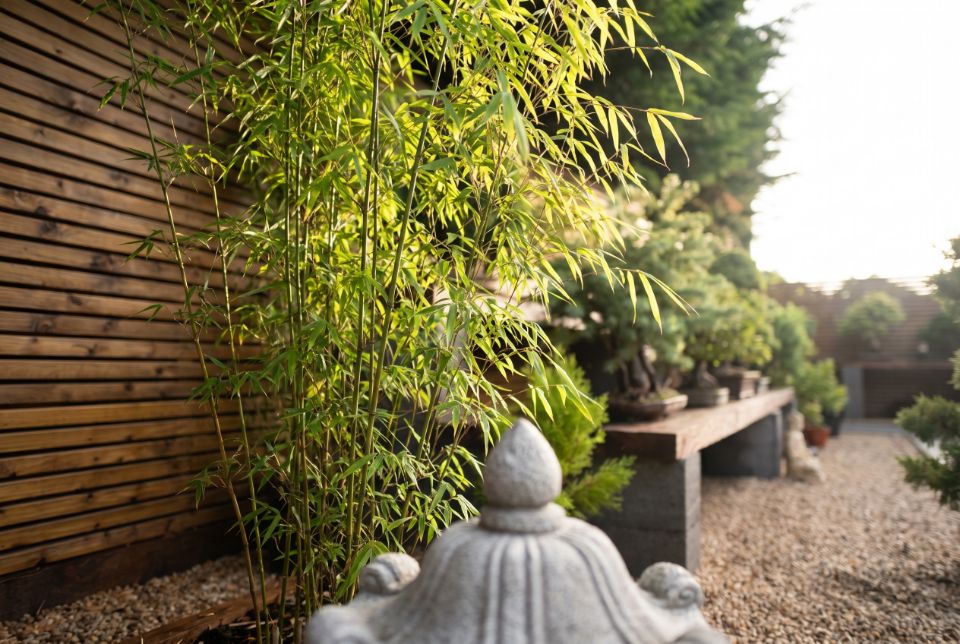
A carefully positioned bamboo canopy can intercept periods of strong direct sunlight while still allowing diffuse and dappled light to reach the trees below.
The objective is not deep permanent shade. Instead, bamboo can be positioned and managed to provide protection when it is most useful, for example allowing gentler morning light to reach a bonsai bench while reducing exposure to stronger afternoon sunshine.
Unlike a solid roof or fixed shade screen, a bamboo canopy is dynamic. Its leaves and branches move with the air, constantly changing the pattern of light beneath them and creating the broken, filtered shade associated with a woodland edge.
More than just shade
Bamboo may potentially influence several aspects of the immediate growing environment.
Solar protection
The canopy can reduce the amount of direct solar radiation reaching foliage, bonsai pots and growing media during periods when the sun is strongest.
Wind protection
Bamboo can also act as a porous wind filter. Rather than completely blocking airflow, a suitably positioned planting can reduce the force of drying winds while maintaining ventilation around the bonsai.
Ground and pot environment
Reducing direct sunlight on benches, pots and surrounding surfaces can help limit solar heating. For bonsai grown in relatively shallow containers, moderating the environment immediately around the pot can be particularly useful.
Humidity and microclimate
Bamboo itself transpires substantial quantities of water through its foliage. Combined with shading and reduced wind speed, an established planting may help create a somewhat more moderated local environment around nearby bonsai.
Bamsai does not assume these effects. We intend to measure them.
Designing bamboo for bonsai
This introduces another dimension to how we select and position bamboo at Bamsai. A bamboo is no longer chosen simply because it has attractive culms or unusual foliage. We can also consider:
- Mature heightWill its canopy eventually sit above the bonsai?
- Canopy densityWill it create light dappled shade or something much heavier?
- Sun positionWhere will its shadow fall during the morning, midday and afternoon?
- Branching heightCan lower branches eventually be removed to create a raised canopy?
- Wind directionCan the planting reduce exposure to prevailing drying winds?
- Seasonal behaviourHow does the density of the canopy change throughout the year?
- Root behaviourIs the bamboo clump-forming, spreading or running, and does it require containment?
This means that some of the bamboo within Bamsai can eventually have two purposes: a specimen worth collecting in its own right, and a functional component of the bonsai garden.
Creating a living parasol
One approach we are particularly interested in is developing selected taller bamboo into what is effectively a living parasol. As an established clump gains height, selected lower branches can be removed while the higher canopy is retained.
This can produce three benefits simultaneously:
- The attractive culms become visible.
- Views through the garden remain relatively open at eye level.
- The foliage above provides filtered overhead protection for bonsai and other sensitive plants.
The result is very different from surrounding a bonsai area with an impenetrable bamboo hedge. The intention is to design the canopy.
Measuring whether it actually works
This is an important part of the Bamsai project.
Rather than simply saying that bamboo creates a better environment for bonsai, we want to investigate what actually happens under Irish conditions.
Bamsai uses environmental monitoring, soil-moisture sensing, weather data, photography and time-lapse recording as part of the collection. As the bamboo canopy develops, this gives us the opportunity to compare conditions such as:
- Air temperature
- Relative humidity
- Soil and substrate moisture
- Water consumption
- Wind exposure
- Direct and filtered sunlight
- Pot and root-zone behaviour
- Foliage condition
Where practical, a monitored bonsai area influenced by bamboo can be compared with a more exposed position. Over successive seasons, that should allow us to move beyond assumptions and build a record of how living bamboo actually affects the bonsai growing around it in Ireland.
Bamsai monitoring record
Measurements from the garden
Monitoring data will be added as the experiment develops. Every figure that appears here will come from Bamsai's own measurements in County Kildare. Nothing on this page is modelled, estimated or borrowed, so until those measurements exist there is nothing to show.
- Air temperature
- Relative humidity
- Substrate moisture
- Water consumption
- Wind exposure
- Direct and filtered sunlight
- Pot and root-zone behaviour
- Foliage condition
A garden that protects the trees within it
The long-term objective is not to eliminate shade cloth, watering systems or other conventional methods of protecting bonsai. There will always be circumstances where they are necessary. Instead, we want to explore whether thoughtful garden design can reduce our dependence on temporary interventions.
A mature Bamsai garden could use bamboo to provide:
- filtered summer shade
- wind moderation
- structure
- privacy
- changing seasonal light
- attractive culms and foliage
- a natural backdrop for displaying bonsai
The bamboo therefore becomes part of the horticultural infrastructure of the garden.
Bamboo + bonsai = Bamsai
At Bamsai, bamboo and bonsai are not two separate ideas. The bamboo collection can help create the environment in which the bonsai collection grows.
As the garden matures, we intend to develop, measure and document this relationship, learning which species, positions and canopy structures work best under Irish conditions.
Instead of simply placing bonsai in a garden, our aim is to develop a garden that helps grow the bonsai within it.