Bespoke sleeper beds
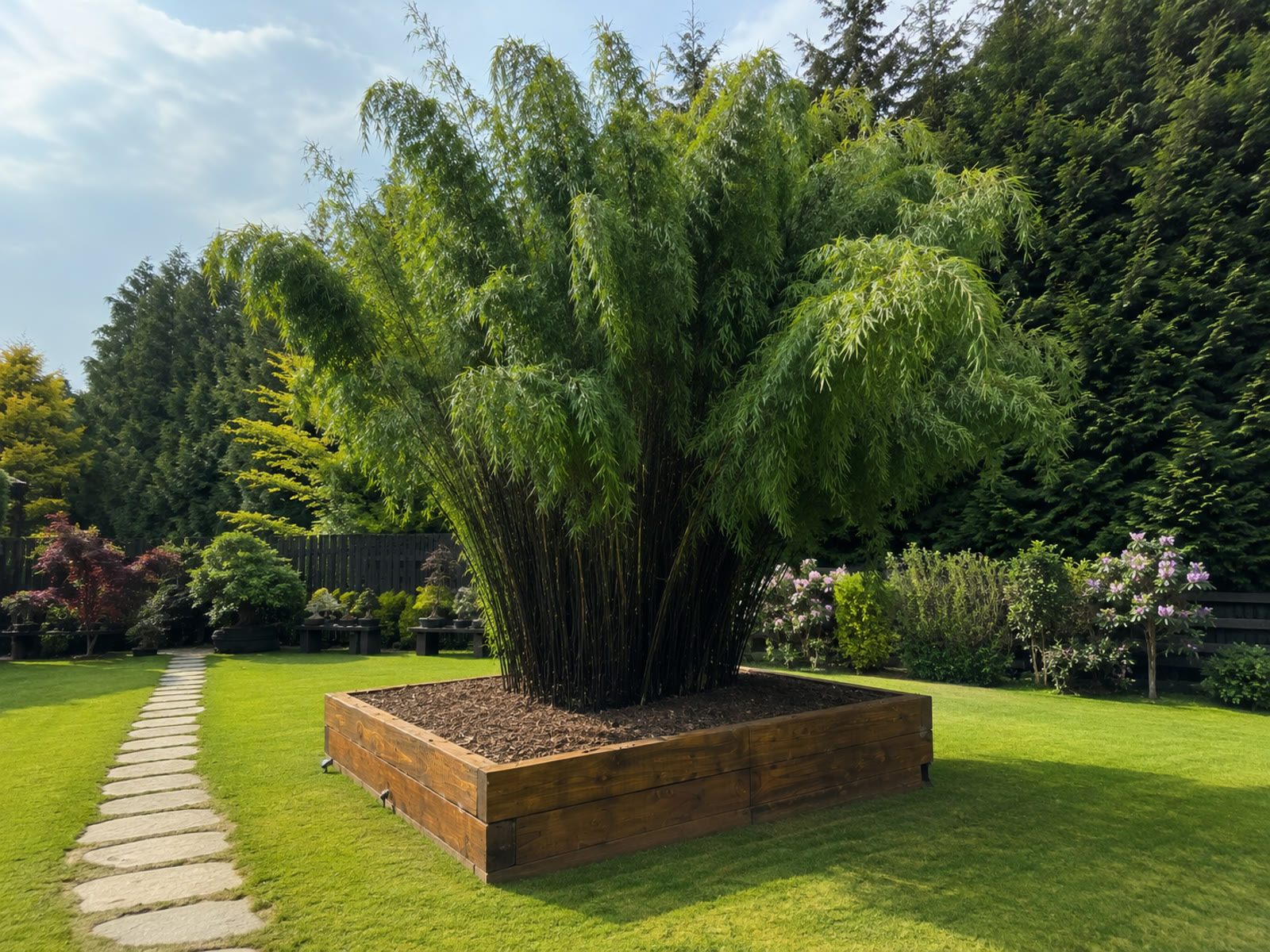
Raised beds built from timber sleepers, sized to the space. Good where bamboo needs a defined bed with room to establish, and good in smaller gardens.
A specialist collection growing in Ireland.
Rare bamboo & bonsai · Ireland
Rare bamboo.
Specimen bonsai.
Over 30 different bamboos and specimen bonsai in Ireland. The collection is still growing.
What Bamsai is
One collection, grown on in an Irish garden, and slowly turning into a nursery, a garden you can walk through, and somewhere to learn.
Rare and unusual bamboo, chosen plant by plant.
Grown on here, hardened to an Irish winter.
A place to walk through, not a catalogue.
Species profiles, growing guides, workshops.
The honest answer
The bamboo that lifts patios and crosses into a neighbour's garden is running bamboo. It sends long rhizomes out sideways, metres at a time, and it surfaces wherever it likes. Bamsai grows non-invasive clumping bamboo. New shoots come from buds around the edge of the clump, so the plant widens where it stands. The running bamboos in the Bamsai collection are grown in containers.
Here is the part most sellers leave out. A clump does keep widening. It is slow, it is a few centimetres a year once mature, and the edge is always visible, so a spade in spring is the whole job. That is a different plant from one you cannot find the end of.
It is also why clumping bamboo makes such good screening. A row of Fargesia gives you an evergreen hedge that holds its leaves through an Irish winter and stays where you planted it.
Year 1. Newly planted. A small root system close to the plant.
It stops. That is the whole point.
Both panels are drawn to the same scale, with the boundary in the same place. The difference is not the plant's size. It is where the rhizomes go.
The difference is underground. Running bamboo sends rhizomes away from the parent plant. Clumping bamboo expands around its existing footprint. At Bamsai, our running bamboos are grown in containers.
Design & installation
We create beautiful, long-lasting bamboo features using rare and unusual varieties that bring structure, colour and privacy to your space.
We visit your property, assess the location, and recommend bamboo suited to the available light, exposure and the effect you want to achieve.
From raised sleeper beds to clad container systems, we take care of everything: selection, installation and aftercare.
Raised beds built from timber sleepers, sized to the space. Good where bamboo needs a defined bed with room to establish, and good in smaller gardens.
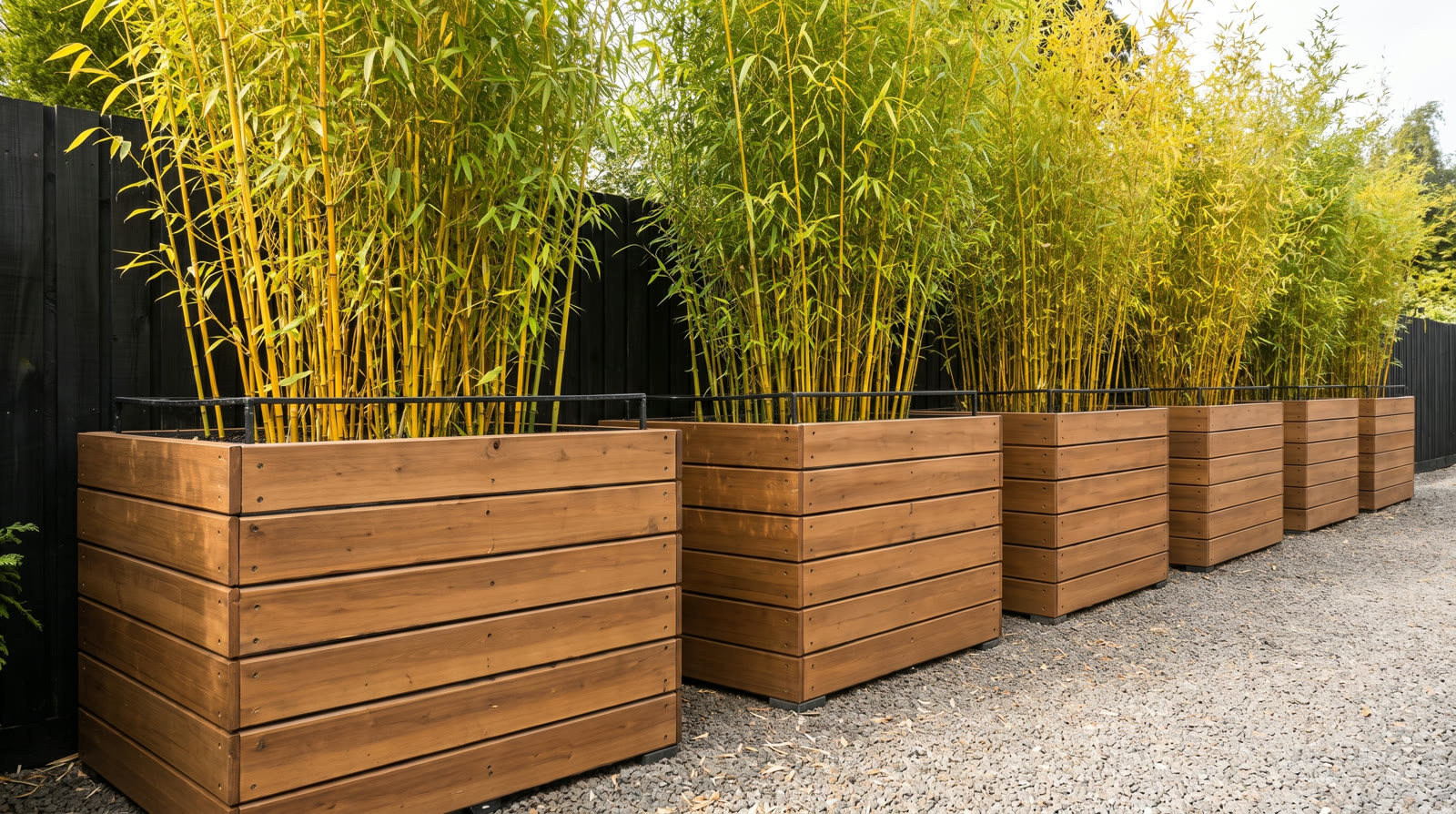
Each planter is built from a strong IBC container and clad in sustainable timber to suit your property. We supply, clad and install with premium soil and carefully selected bamboo. Instant privacy, and the height to make a real screen.
DesignInstallEnjoy
Enquire about your gardenThe collection
Rare and unusual bamboo, gathered plant by plant and grown on in Ireland. Every plant is recorded the same way, so the collection can keep growing.
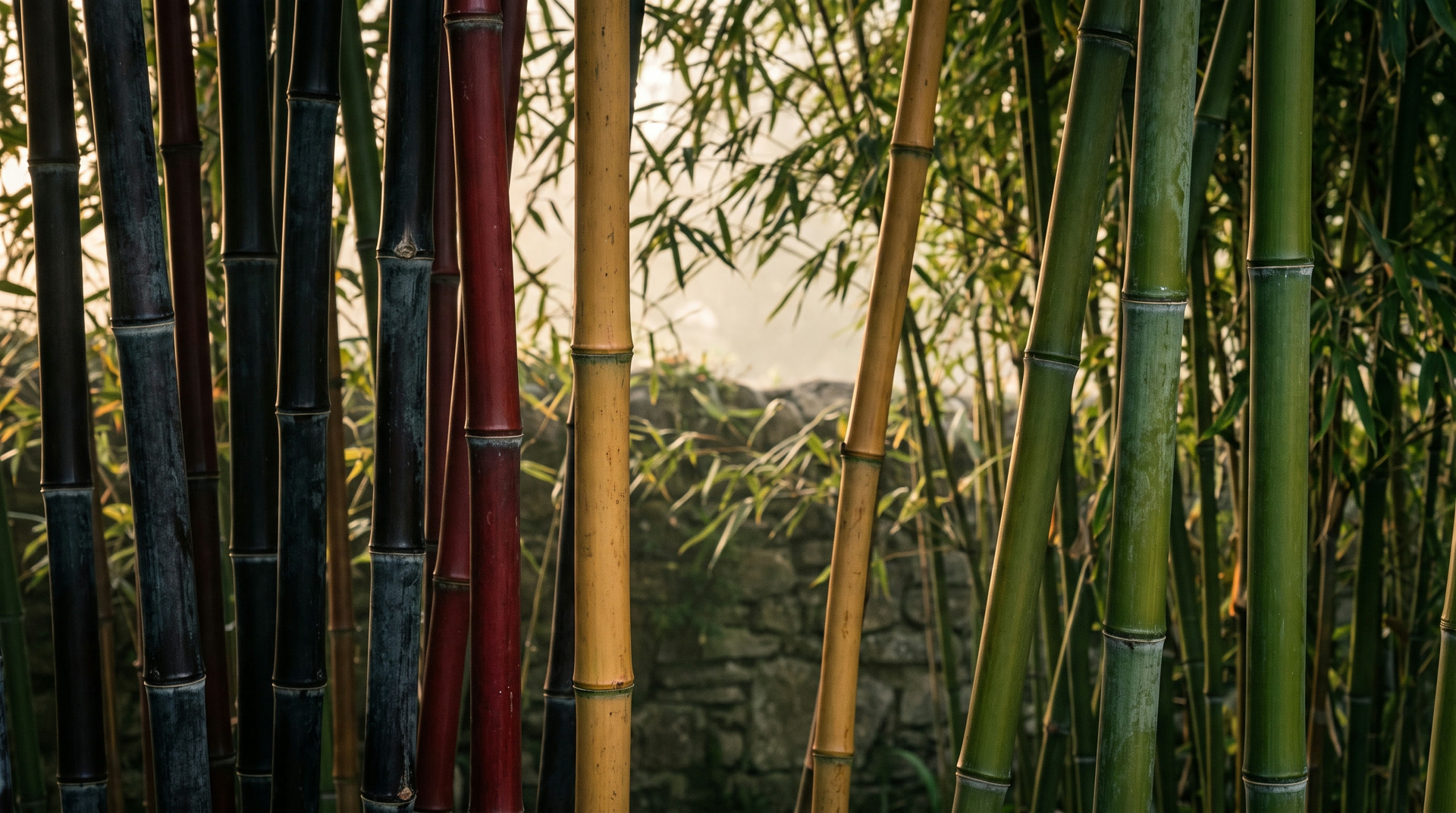
The running bamboos in the collection are grown in containers.
Provenance
You may notice that some bamboo in the collection have familiar cultivar names, while others carry codes such as KR7613, KR5287 or BBM20-BR255. These codes are not substitutes for names. In many cases they are the most important part of the plant's history.
Many unusual bamboos come from wild-collected material. When plants or seed are collected from natural populations, they are recorded under a collection number rather than given a commercial cultivar name. That number preserves the identity and provenance of the original collection, and distinguishes one naturally occurring form from another.
A named cultivar such as Fargesia nitida 'Black Pearl' was selected, named and propagated for particular characteristics. A bamboo carrying a collection number has a different story. It can represent material descended from one wild collection, and may never have been given a cultivar name at all.
Floraison 2019 Brésil
Provenance confirmed by bamboo specialist Jos van der Palen of Kimmey. The BBM collection code connects the bamboo growing in our garden in Ireland today with the people and the original collection that plant material came from.
A collection number is a reference, not a placeholder. It can preserve important information about a plant's collection, provenance or identity, and in some cases tells us more about its history than a commercial cultivar name would.
Where a plant's origin is documented and confirmed, we publish it. Where it is not, the field stays empty. We would rather leave a gap than fill it with a good guess.
This is why we do not intend to replace these numbers with invented commercial names. Knowing where a bamboo came from, who collected it and the history behind it is far more interesting than an attractive name. As the collection develops we will document as much of this provenance as we can, so visitors can find the story behind individual plants.
Sometimes the number tells a better story than a name.
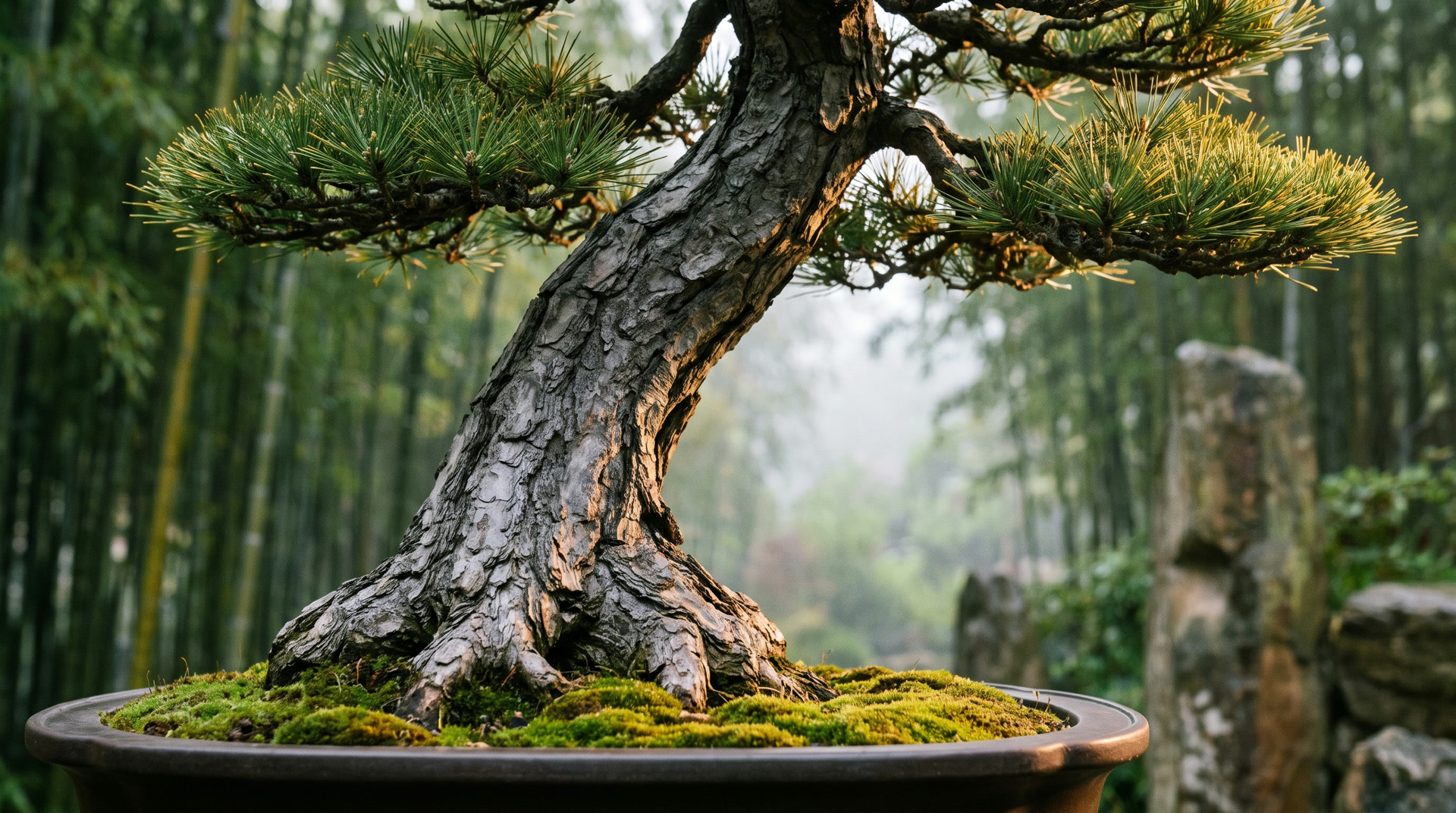
The other half
Most bought bonsai die in the first month. Not because bonsai is hard, but because a supermarket tree arrives in soil that will not take water and nobody tells the buyer anything.
Every specimen we sell will come with the year it started.
Living climate control
What if bamboo could do more than provide a backdrop for bonsai?
At Bamsai, we are exploring how carefully positioned bamboo can provide filtered shade, reduce exposure to drying winds and become part of the growing environment for our bonsai.
Measure. Understand. Thrive.
We combine traditional bonsai knowledge with careful measurement. Pot weight is one of several indicators we use to understand when a tree needs water, so every bonsai gets exactly what it needs, when it needs it.
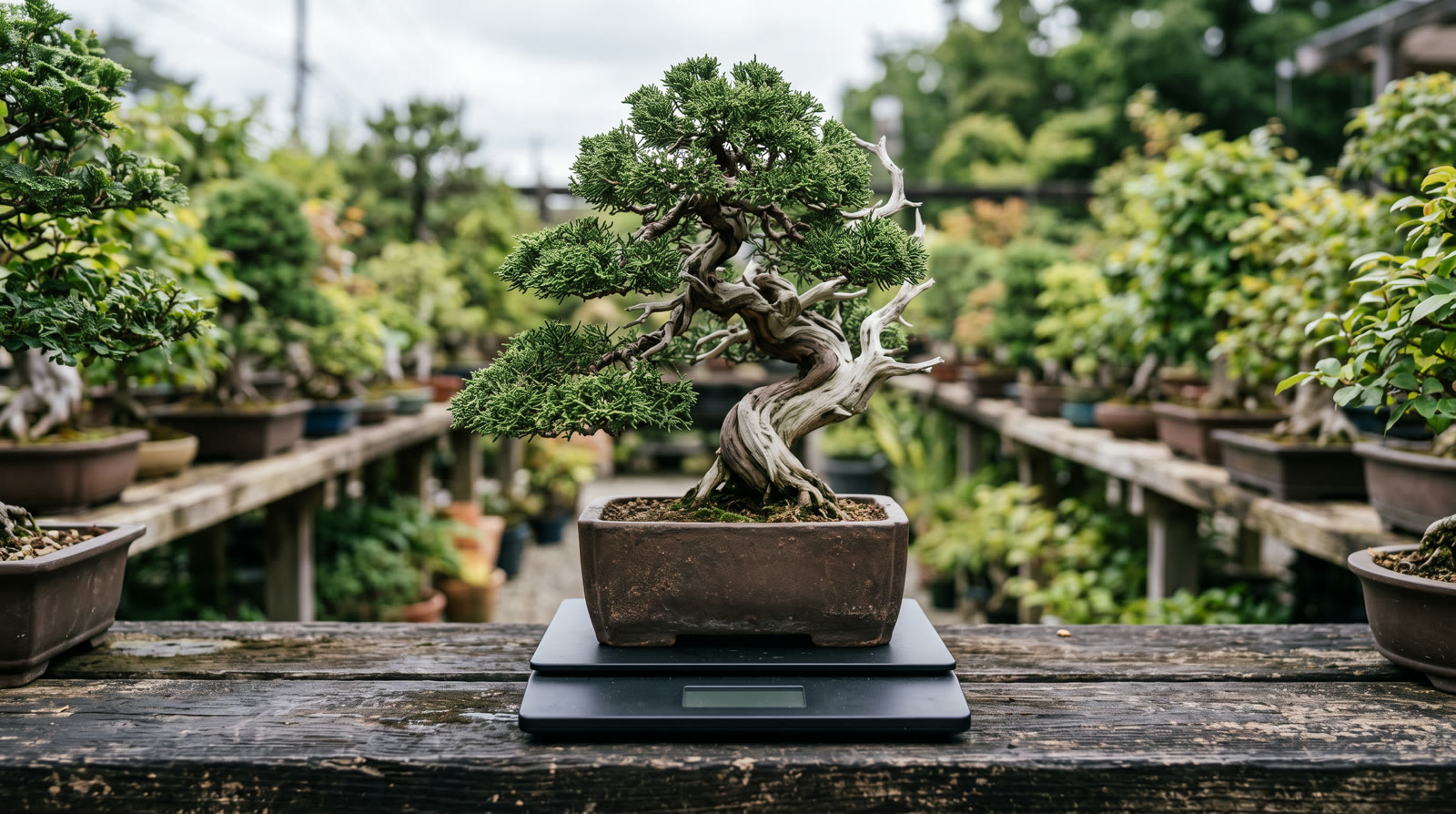
The trigger range is not a fixed number. It changes with season, temperature, wind, light, foliage mass and root activity. We adjust as conditions change.
Pot weight is a powerful indicator when combined with environmental and soil data. Together they give us the full picture.
Traditional bonsai horticulture, supported by measurement and monitoring.
This thoughtful approach helps us make better decisions, strengthen our trees and provide the highest level of care for every bonsai at Bamsai.
Stronger roots. Better care. Beautiful bonsai.
Premium bonsai soil
The foundation of healthy roots and thriving bonsai.
One hundred per cent natural Japanese clay granule. Ideal for bonsai and all container grown plants.
Akadama is a high quality, one hundred per cent natural clay granule from Japan. Ideal for bonsai and all container grown trees. It breaks down slowly, supporting long term root health and stability.
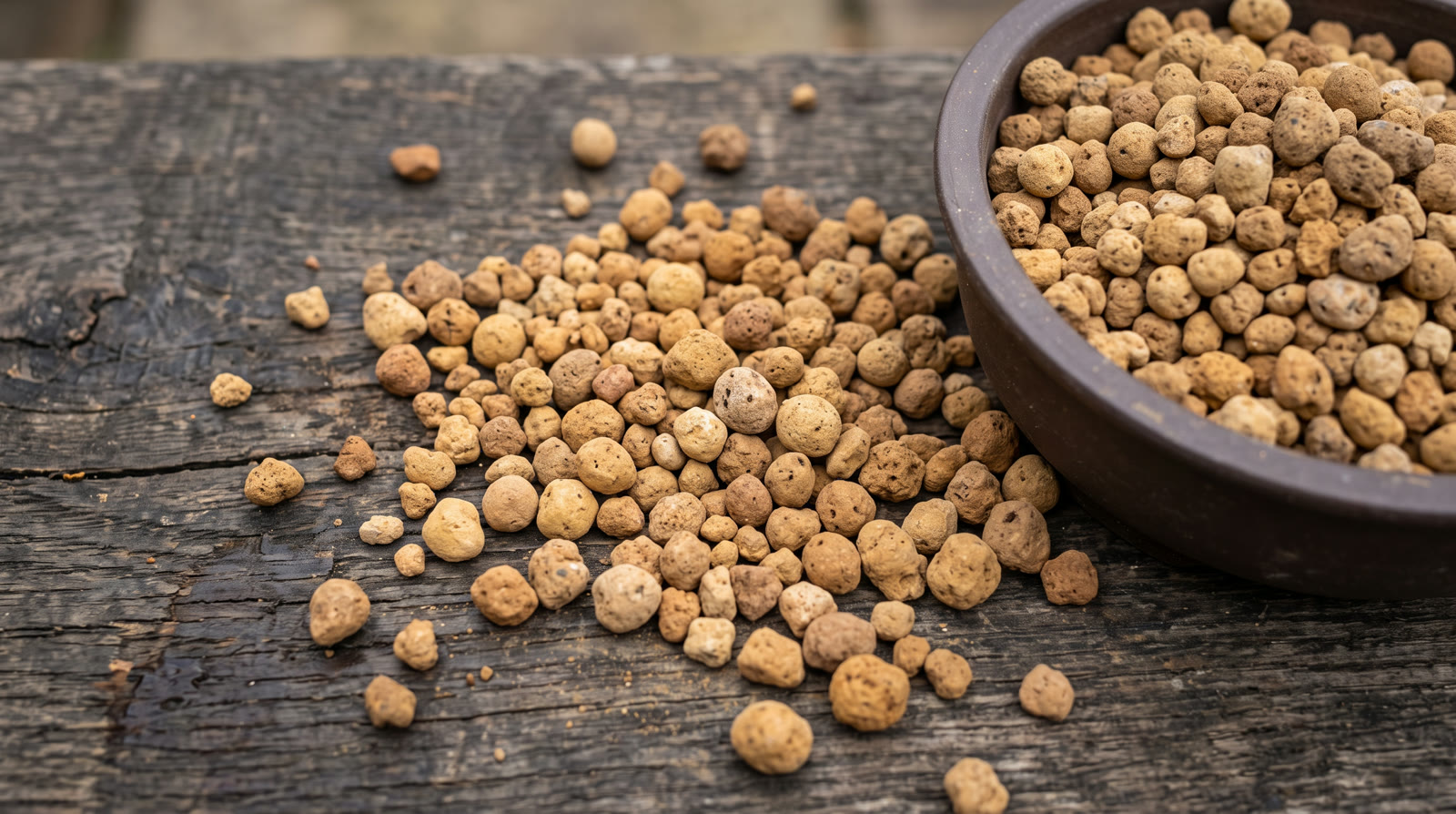
At Bamsai we use only the best materials on our own trees. Now available for yours.
Screened for consistent, high quality granule sizes. The circles show the relative difference between them.
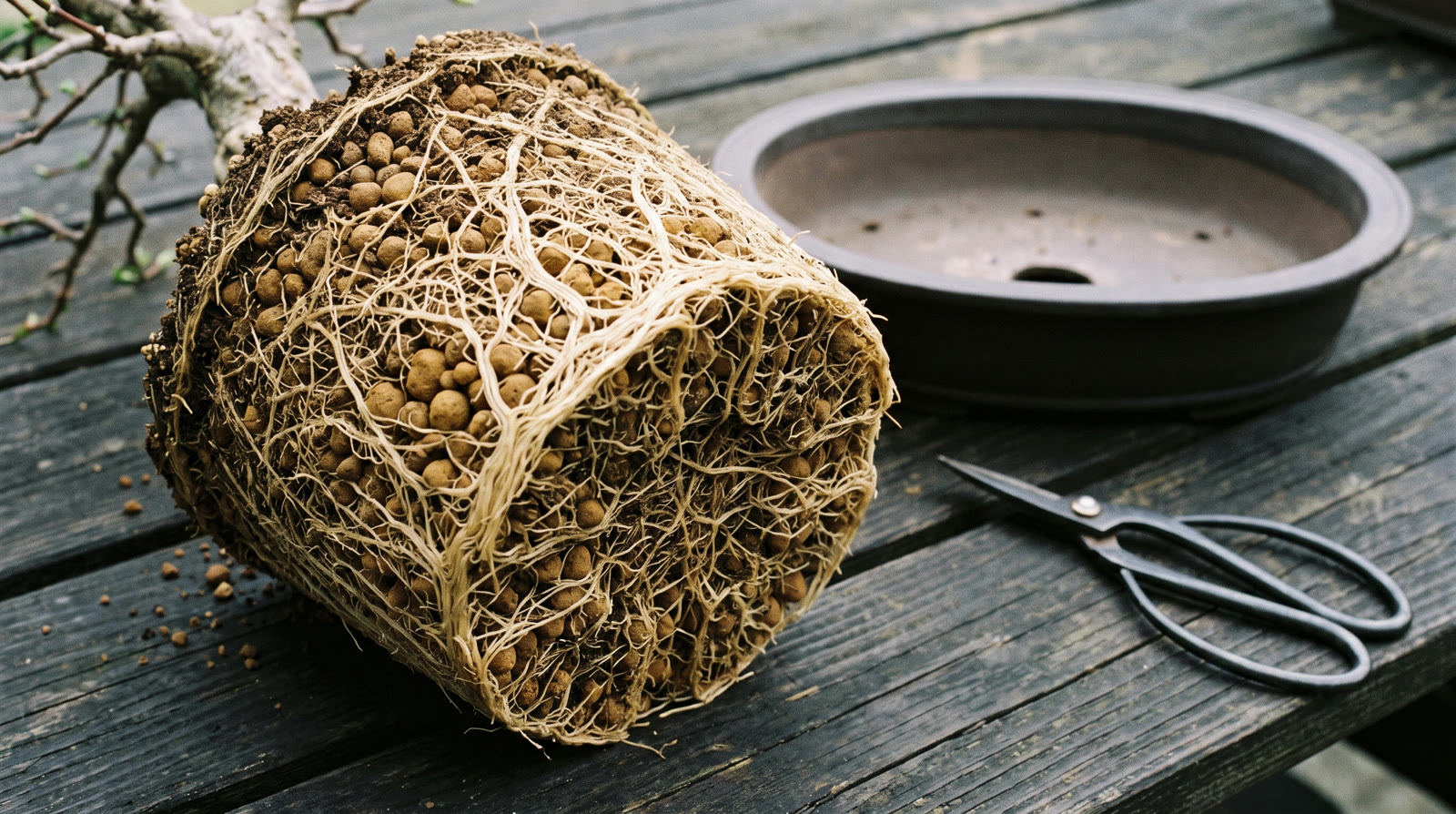
Better soil. Better roots. Better bonsai.
The garden
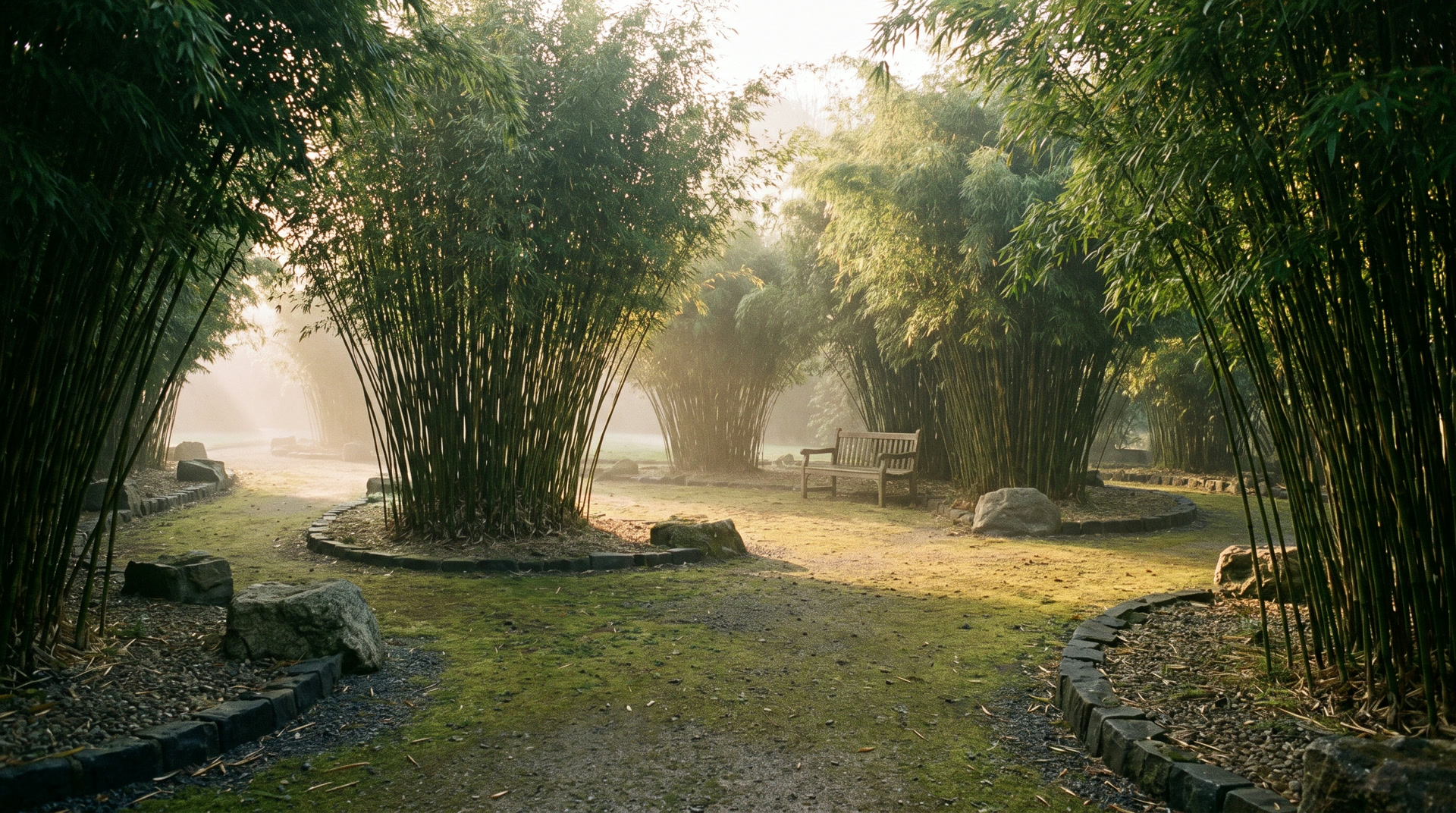
Bamsai is being built as a place, not a catalogue. Paths through the collection, the nursery beds, and a bench where the bonsai sit. Workshops and demonstrations when the beds are ready.
Gallery
Photographs from the garden, the nursery beds and the bench.
A season in motion
A real Bamsai bamboo, captured growing over time.
Borinda papyrifera 'KR 7613'
A remarkable bamboo in motion. This time-lapse captures the extraordinary speed of a new shoot emerging and extending upwards, one of the most fascinating moments in the bamboo growing season.
Learn
About Bamsai
Bamsai is a developing specialist collection of exceptional bonsai and rare bamboo, based in County Kildare, Ireland, close to the Irish National Stud & Japanese Gardens.
What began with a passion for bonsai and Japanese horticulture has developed into a much broader project: bringing together bonsai at different stages of development and refinement with an increasingly unusual collection of bamboo from specialist growers, collectors and botanical introductions around the world.
Our bamboo collection is deliberately different from a conventional nursery range. Alongside recognised garden cultivars, we grow rare clumping species, wild-collected material and documented collector accessions carrying reference codes such as KR, CS, BBM and BR. These codes preserve part of each plant's history, linking, where appropriate, living plants in Kildare back to individual collectors, expeditions and locations thousands of kilometres away.
The bonsai collection is equally varied, including Japanese white pine, Japanese maple, trident maple, Japanese larch, juniper, hornbeam, yew, Satsuki azalea, Chinese elm and other developing specimens. Some are mature bonsai; others are trees we will develop and document over many years.
Bamsai isn't simply about collecting plants. It's about understanding how they actually grow in Irish conditions.
Rare bamboo within the collection is observed and documented as it establishes in County Kildare. We use soil-moisture and environmental monitoring, local weather data, photography and time-lapse recording to follow shooting, culm development, seasonal colour and long-term performance.
The same approach extends to our bonsai. Watering, exposure, seasonal development and each tree's individual response are observed carefully rather than relying solely on generic cultivation advice.
As the collection develops, we intend to share more of this information through the Bamsai website, allowing visitors to follow individual plants and trees over time.
Our location is part of the Bamsai story. We are based close to the Irish National Stud & Japanese Gardens in County Kildare, an area already closely associated with Japanese garden design and horticulture.
For anyone visiting Kildare with an interest in Japanese gardens, bonsai, bamboo or unusual plants, Bamsai offers something different: a developing specialist collection containing established favourites alongside genuinely uncommon collector material.
Visits to Bamsai are by prior appointment only.
Bamsai is an independent collection and is not affiliated with the Irish National Stud & Japanese Gardens.
Bamsai is intended to develop slowly. Many of the plants in the collection will take years to reveal their full character. Rather than hide that process, we want to document it, from a rare bamboo producing its first Irish culm to a bonsai gradually improving through successive seasons of cultivation and refinement.
Over time, our aim is for Bamsai to become a place for rare plants, specialist knowledge, education and an appreciation of bonsai and bamboo in Ireland. The collection will continue to evolve as we find plants of genuine horticultural, botanical or historical interest.
Bamsai is not simply a collection of finished plants. It is a collection we intend to grow, study and share.
Visit
Design and installation enquiries, workshops and demonstrations, plus first word when plants are released. No newsletter treadmill.
Visits are by prior appointment. Tell us what you would like to see and we will be in touch.
Thank you. You are on the list, and you will hear from us before anyone else.
We have your details and will be in touch.
Terms of use
Unless otherwise stated, all photographs, images, videos, written content, plant records, collection notes and other original material displayed on Bamsai.eu are the property of Bamsai and are protected by applicable copyright and intellectual property laws.
Photographs displayed on this website primarily document plants, bonsai, bamboo and other material from the Bamsai collection. They may not be copied, reproduced, republished, distributed, modified, sold, licensed or used for commercial purposes without prior written permission from Bamsai.
Permission is also required before Bamsai photographs or original content are reproduced on other websites, social media accounts, publications, catalogues, advertisements, marketplaces or other digital or printed media.
Where photographs, information or other material have been supplied by third parties, ownership remains with the respective copyright holder and the material will be credited where appropriate.
Bamsai welcomes requests from researchers, horticultural organisations, educational institutions, publications and other interested parties wishing to reproduce material for legitimate educational, botanical or research purposes. Permission should be requested before use.
The fact that an image or other material is publicly accessible on Bamsai.eu does not place it in the public domain or constitute permission for reuse.
For permission requests, please contact Bamsai through the contact details provided on this website.
Bamsai takes reasonable care to provide accurate botanical, horticultural and provenance information. Plant taxonomy and nomenclature can change over time, and some collector accessions may have uncertain or evolving botanical identities.
Where appropriate, Bamsai retains original supplier names, collector numbers and accession references alongside currently accepted botanical names.
Growing observations recorded at Bamsai relate to plants grown under our own conditions in Ireland and should not be interpreted as a guarantee that the same plant will perform identically in another location.